
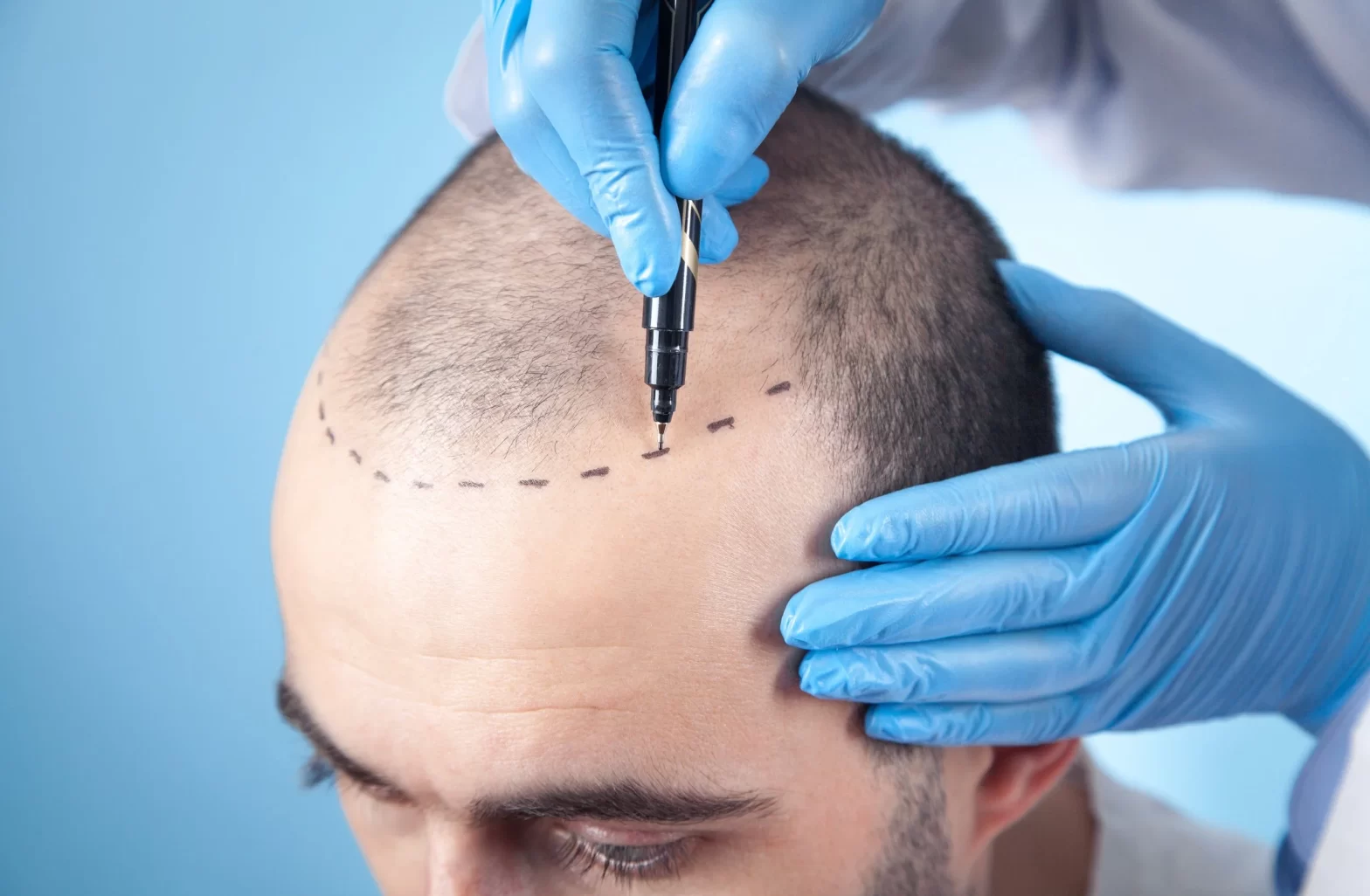
Thinning of your hair or baldness may have a negative effect on your looks and may lower your self-confidence, so that you might think about hair transplant as a means of solving the problem. However, hair transplantation is not a solution for everybody, and the efficiency of the procedure will depend on many factors including the reason of hair loss, the supply of donor hair, your general state of health, age and realistic expectations.
What Is Hair Transplantation?
Hair transplant is a surgical procedure during which healthy hair follicles are extracted from the donor site of the head and transplanted to the affected area of the head. There are two techniques which are widely used – FUE (Follicular Unit Extraction) and FUT (Follicular Unit Transplantation). The choice of the technique will depend on the features of your hair, donor site, and hair loss pattern.
Why Is Hair Transplantation Not Right for Everybody?
The thing is that hair transplantation does not grow new hair but only repositions healthy follicles from one place of your head to another, and therefore the patient should have a sufficient supply of healthy donor hair.
Moreover, there are kinds of hair loss which are temporary or caused by some medical, nutritional, hormonal or scalp problems, and in such case, it would be better to find the cause first before undergoing the surgery.
Professional consultation is necessary to decide whether hair transplantation is the right treatment for you.
The Reason of Hair Loss Should Be Clarified
Knowing the reason of the problem will help to decide whether it would be worth to have a hair transplant or not. Pattern hair loss can make a person fit for the procedure if he has good donor hair.
However, there are other reasons of hair loss including hormones imbalance, nutrient deficiency, drugs, illness, stress, scalp disorders, and specific inflammatory hair loss.
The improper identification of the cause of hair loss will not make it right to proceed with the transplant immediately. A professional evaluation will determine what should be done first.
There Should Be Enough Donor Hair
Donor hair is among the crucial criteria for hair transplant suitability. Hair follicles are usually transplanted from an area where hair grows strongly and stably to places where hair starts thinning.
Still, the donor area is not limitless. People who have insufficient hair density or weakened donor area cannot have enough follicles for coverage.
It is necessary to evaluate donor hair quality, density, and long-term stability prior to the procedure recommendation.
Age and Hair Loss Stability Are Important Criteria
There is no age at which all people become candidates for hair transplant. Still, younger individuals need to be more careful because they still can change their hair loss pattern.
After the procedure, if hair keeps falling out, it will affect the neighboring natural hair, thus making the transplantation results look different in the future.
Thus, the treatment plan should take into account future hair loss progression.
Location and Severity of Hair Loss Will Impact the Treatment Outcome
Location and extent of hair loss will impact how much one can hope for.
Individuals who show little signs of hair loss and possess good donor areas will have other hair transplant options than individuals who have extensive balding. It is crucial to use available donor follicles appropriately to achieve the best result in terms of coverage and natural appearance.
A transplant may improve the look of thinning areas, yet cannot give the same density as the individual used to have prior to losing his or her hair.
One’s Scalp Must be Evaluated
Healthy scalp will ensure a successful procedure of hair restoration. Inflammation, infection, irritation or some other scalp-related problems should be solved before a procedure takes place.
Scalp evaluation should be performed during a consultation. In case the patient experiences hair loss because of some scalp problem, then solving this problem will be the priority.
Proper scalp health will also ensure better healing and recovery process.
General Health of the Patient
Since hair transplantation is a surgical procedure, general health of the patient becomes important.
Some diseases, medications, problems with wound healing, blood clotting, anesthesia etc. may be important to consider before a procedure. It is important for the patient to provide full information regarding one’s medical history, current medications, any allergies and other health problems one may have.
It will help to determine the feasibility of the procedure. Do not change the medication regimen without consulting the respective medical professional.
Realistic Expectations
In addition to having enough donor material, other factors should also be considered. In particular, realistic expectations need to be set.
Although hair transplant surgery can give a certain degree of restoration and help cover bald spots, it cannot ensure that one would get their hair density, hairline, and look like when he was younger.
The results depend on the amount of donor material available, characteristics of hair, extent of hair loss, healing process, and the chosen method of treatment. A reasonable consultation needs to provide information on both potential advantages and limitations of the procedure.
The Characteristics of Hair
Such factors as texture, thickness, color, and curliness of hair can affect the level of density achieved after hair transplantation.
For instance, curly or thick hair can produce the effect of denser hair in some cases. Fine hair might be more complicated to work with. Contrast between hair and scalp may also play an important role.
It does not mean that such characteristics can determine suitability for the procedure. It only helps with planning the treatment.
Natural Hair and Future Hair Loss
One of the things that specialists need to take into account is the presence of natural hair on balding areas. If the patient has any, specialists should analyze its chances of continuing to thin out.
Hair transplant surgery will not guarantee that it would not fall out. Therefore, the further development of the problem needs to be taken into consideration during treatment planning.
It may include non-surgical treatments in some cases.
Design of the Hairline Needs Thoughtful Planning
The hairline is among the most noticeable features of a hair transplant procedure. In order to create a natural look, one should pay attention to such factors as facial proportions, patient’s age, availability of donor hair, existing hair and possibility of hair loss further.
Too aggressive placement of a hairline can become inappropriate when the person experiences hair thinning. Thoughtful planning is aimed at creating a balanced and natural look in the long run and not at planting the largest number of hair.
When Is the Transplant Not the Best Choice?
There are several cases when the transplant is not the best solution right now. They can be:
- Absence of healthy donor hair
- Temporary and/or treatable cause of hair loss
- Untreated scalp problems
- Progression of hair loss
- Health conditions increasing surgical risks
- Misunderstanding of results’ nature
- Kinds of hair loss unsuitable for transplantation
It doesn’t necessarily mean that the hair restoration is impossible. In some cases, it may be beneficial to treat the cause, to observe the hair loss process or consider other options.
What Should Happen during a Consultation?
Proper consultation allows determining whether the person is a good candidate or not. During the consultation, the specialist can evaluate:
- Current hair loss pattern
- Density of donor hair
- Characteristics of hair thickness & type
- Scalp condition
- Shape of hairline
- Patient’s medical and family history
- Treatment of hair loss before
- Expectations and goals of treatment
Consultation also gives the opportunity to talk about potential benefits, limitations, risks, recovery and time required for that. Evaluation is way more reliable than determining candidacy based on patient’s age and hair loss level.
Hair Transplant vs. Other Treatments
There are numerous ways to tackle hair loss, and hair transplant is only one of them. In different cases, depending on what causes hair loss, it might make sense to use medical treatment, scalp therapy, make certain changes to one’s lifestyle or try out other non-surgical options.
In certain cases, it may be useful to manage hair loss in a proper way before opting for surgical treatment in order to find an appropriate long-term treatment strategy.
What You Should Do If You Are a Candidate for the Procedure
Your doctors and other healthcare professionals will give you precise instructions in case you become a good candidate for hair transplantation. This could include conversations on your medications, medical history, life style, scalp care, etc.
It is necessary to follow all instructions carefully, as well as learn about your post-procedure recovery process and have realistic expectations.
Who Should Conduct Your Hair Restoration
Qualifications of your medical professional will play an important role when it comes to hair restoration.
Make sure your chosen specialist conducts a personal assessment of your situation, explains the procedure, warns you of possible risks and drawbacks and does not promise guaranteed results of the procedure.
Do not choose anyone who guarantees that everyone suffering from hair loss is a good candidate for the procedure.
Frequently Asked Questions
Is a hair transplant possible for all cases of hair loss?
No, a number of issues determine whether someone is a good candidate, such as the reason for hair loss, donor hair, scalp condition, general health, and reasonable expectations.
Is there a certain age for undergoing a hair transplant?
Age is not a factor since what determines whether one will be eligible for the procedure is their stability and pattern of hair loss.
Are women eligible for a hair transplant?
While some women can be potential candidates for the treatment, hair loss cause and pattern need to be considered first.
Is hair transplant the end of hair loss?
Not necessarily. While transplanted hair follicles cover the area that has been done the procedure, other hairs might continue losing hair based on their causes.
How much time is needed for results to appear?
Results take time to show because of the gradual process involved in hair restoration.
Conclusion
Therefore, is hair transplantation right for everyone? The answer to this question is negative. Hair transplantation can be effective if many factors are taken into account besides hair loss being obvious. Such factors as the cause of hair loss, the process of its progression, the presence of the donor hair, scalp condition, general health condition, the presence of hair and its features, and expectations should be considered.
For those patients who fit certain criteria, hair transplantation can serve as one of the methods of regaining hair in certain parts. Nevertheless, the choice of the best therapy should start with correct diagnosis.
In case you are considering hair transplantation, book a consultation to assess your specific case and suggest the best method of treatment.